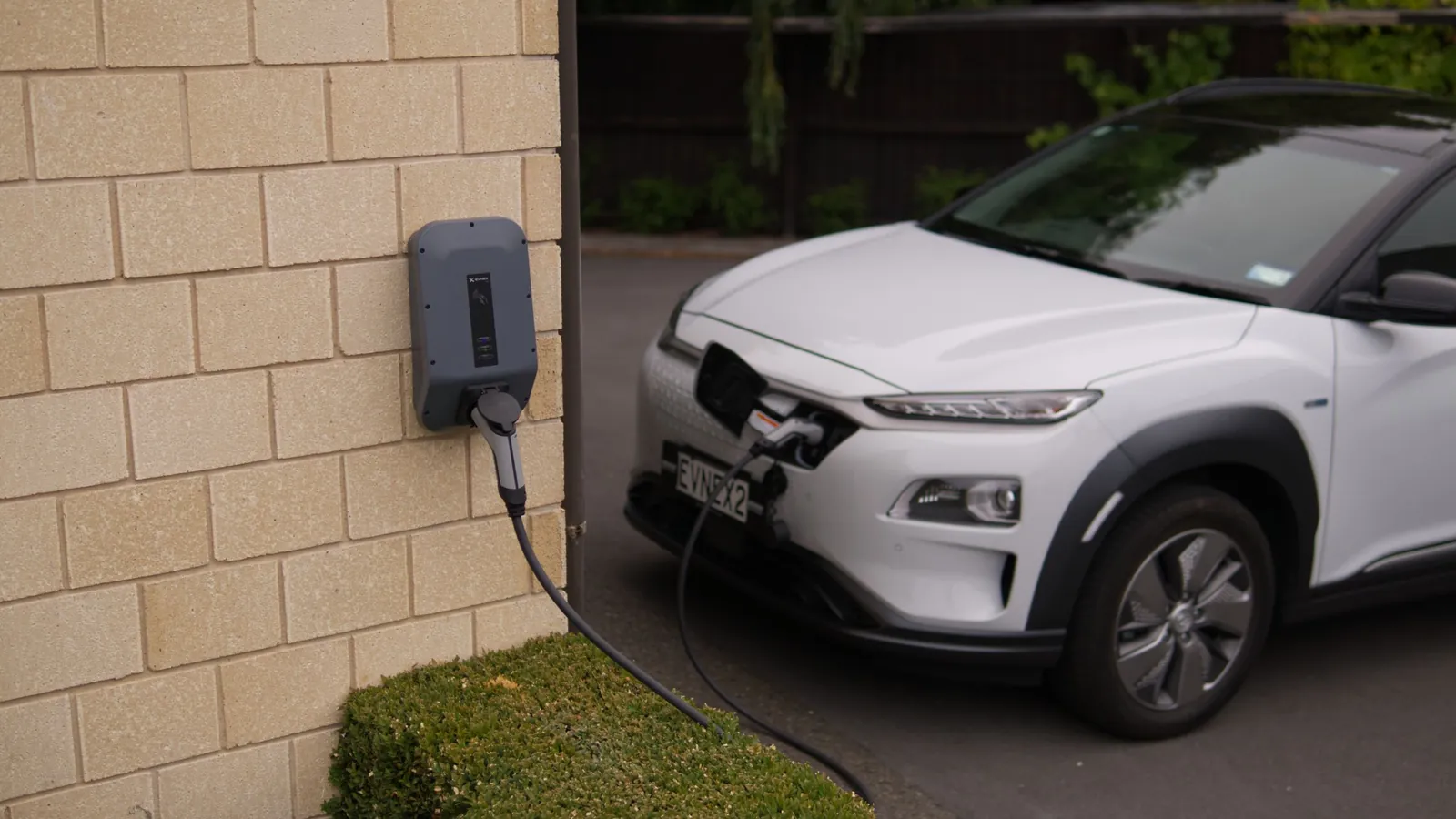


You drive an electric company car and have a charger at home. Your employer can reimburse the electricity at the CREG rate, on one condition: knowing how many kWh the car actually took at your place. As long as your charging sessions are not recorded, that reimbursement stays theoretical.
Here is what the rules ask for, how to check that your sessions are counted, and what to do if your charger has lost its connection, as many Nexxtender units have since the Powerdale bankruptcy.
What the rules ask for
Belgian circular 2024/C/77, made permanent in 2025, lets employers reimburse home charging at the CREG rate. In the fourth quarter of 2026, the cap is 32.25 cents per kWh in Flanders, 36.88 in Brussels and 37.79 in Wallonia, depending on where you live. Your employer may reimburse less, not more.
In return, the employer must know the car's exact consumption. The text expects the charger to send this data through a communication system, and also accepts other means, such as an intermediate meter, as long as they can be verified. If several company cars charge on the same unit, each one must be counted separately.
For a charger bought, rented or leased since 1 January 2025, the meter must also reach accuracy class B, an error margin of 2 % at most. An older charger is not covered by that requirement, but its readings must remain verifiable.
How to tell whether your sessions are recorded
Most of the time, recording is automatic: your charger is linked to a charging service provider, chosen by your employer or the leasing company, which passes on the kWh every month. Three checks are enough:
- your recent sessions show up in that provider's app or portal, with date and kWh;
- your monthly statement or reimbursement slip shows a kWh total that matches what you charged;
- the reimbursement actually reaches your account, at the rate set in the car policy.
If nothing has shown up for a month or two, do not let it slide. The charger may have lost its connection, or the service contract may have ended. According to EV Belgium, a driver covering 20,000 km a year and charging half of it at home loses about 630 euros a year when sessions stop being reimbursed.
Home charging without the paperwork
The simplest option remains a charger installed and managed through your employer: the provider handles the connection, the readings and the reimbursement. You plug in and do nothing else.
If you own the charger, it can also be linked to a service provider, as long as it speaks a protocol the provider understands. The open standard is called OCPP. Most recent chargers support it, and an installer can configure them. Without a connection, you are left with an intermediate meter read by hand: it is accepted if it can be verified, but ask your employer first what proof they expect.
What about Nexxtender chargers?
Many Nexxtender Home units were installed for company cars. They reported their sessions through Nexxtmove, Powerdale's online service. Since the 2023 bankruptcy, the software was taken over without the customers, accounts were closed, and for many owners no data reaches the employer any more. Some energy suppliers kept the service running for their own customers: if that is your case, your sessions may still be counted.
The charger itself still measures the energy it delivers. To get those readings out again, it needs a connection:
- get access back if you changed phones: we calculate its PIN code from a photo of the label;
- add OCPP support with a small box placed next to the charger, which records every session with its kWh and can pass it on to a service provider or to your own system.
Questions for your fleet manager
- Which provider passes on my kWh, and where can I see them?
- What proof do you accept if my charger is no longer connected: a session report, an intermediate meter, a photo of the meter?
- At what rate do you reimburse: my region's CREG cap, or less?
- Can the company cover the cost of bringing my charger back into service?
Frequently asked questions
How can I tell whether my home charging sessions are recorded?
Your sessions should appear, with date and kWh, in the app or portal of the provider your employer chose, then on your monthly reimbursement statement. If nothing has shown up for a month or two, the charger may have lost its connection: talk to your fleet manager.
At what rate can my employer reimburse home charging?
At most the CREG rate for your region of residence. In the fourth quarter of 2026: 32.25 cents per kWh in Flanders, 36.88 in Brussels and 37.79 in Wallonia. Your employer may reimburse less.
Does my charger need a class B meter?
Yes if it was bought, rented or leased since 1 January 2025. An older charger is not covered, but its readings must remain verifiable for your employer.
My Nexxtender no longer sends my sessions to my employer. What now?
Since the Powerdale bankruptcy, Nexxtmove no longer passes on data for most chargers. The charger still measures energy: an OCPP box placed next to it records every session with its kWh again. Have your employer approve that report before you rely on it.